
The Day We Found $18,000 in Two Hours
Apr 06, 2026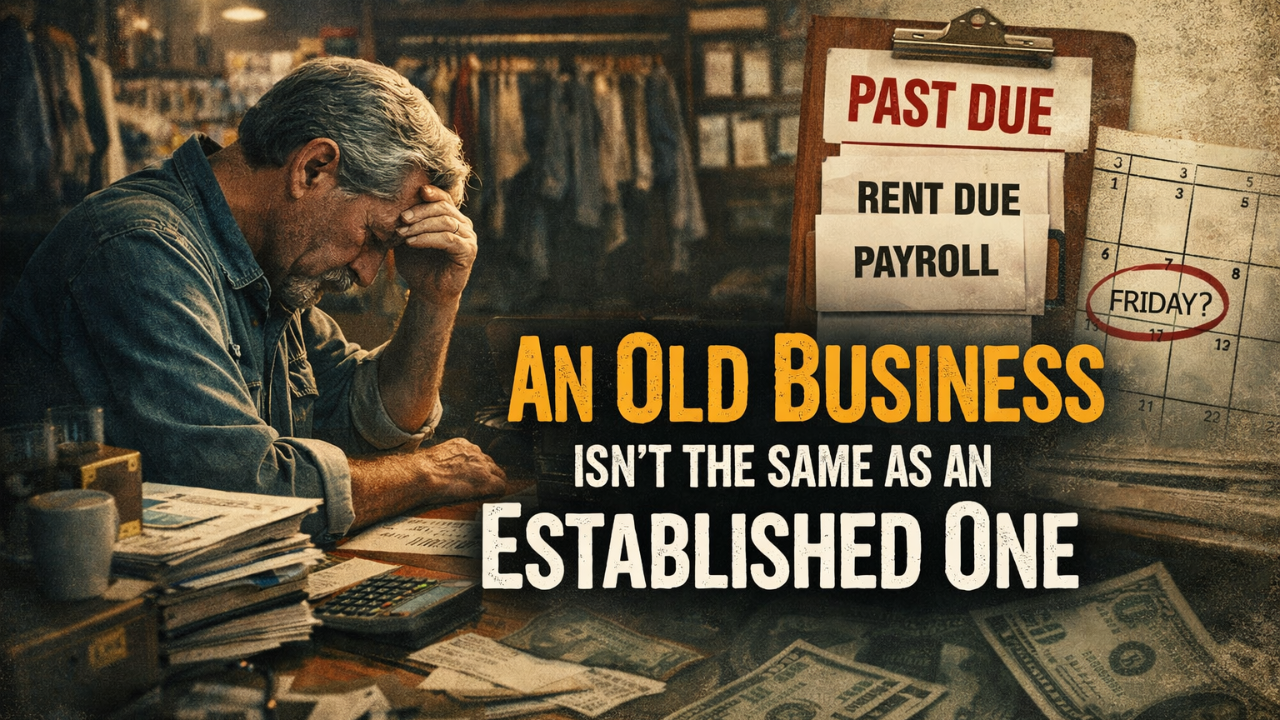
I walked into a retail store that had been open for years — and it felt like it was barely breathing.
From the outside, nothing looked wrong. Good location. Decent foot traffic. Products worth selling. But within five minutes of talking to the owner, I could see where his head was.
Not on growth. Not on the future.
On Friday.
Payroll. Rent. Whether the account would clear before the vendors drafted.
That's where he was living — not in his business, but under it.
An Old Business Isn't the Same as an Established One
Here's something most people don't want to say out loud: there's a difference between ten years of experience and one year of experience repeated ten times. The difference of a business that's just been "around" for ten years and a business that's actually built.
An established business has structure. An old business just has history.
And history doesn't pay the bills.
When I asked him to walk me through a normal day, the picture got clearer fast. Constant interruptions. Pricing based on gut feel. No consistent way to increase what a customer spent on any given visit. No system to bring people back. No referral engine running in the background.
Everything ran through him — every decision, every fire, every push forward.
When there's no structure, you become the structure. And carrying that weight, day after day, doesn't just slow a business down. It quietly breaks the person running it.
The Two-Hour Work Session
We didn't launch anything. We didn't rebrand. We didn't add a single new product.
We just sat down and worked through what was already there.
Two hours. Hands-on. Looking at the numbers he already had access to but hadn't organized in a way that meant anything.
What we found wasn't complicated — it was just invisible to him, because he'd never had anyone help him look.
Here's the specific system we focused on: Average Ticket Value (ATV).
Most operators track revenue in broad strokes — monthly totals, slow seasons, busy weekends. What they don't track is what each individual transaction is actually worth, and more importantly, what it could be worth with small, intentional adjustments.
We worked through three questions:
1. What is your current average transaction? Not a guess — the actual number, pulled from his point-of-sale data. For most retail owners, this number is lower than they think.
2. What would a 10–15% increase in that number look like? Not a dramatic overhaul. Not a price hike that would send customers to a competitor. Just a modest, defensible lift — through bundling, through soft upsells at checkout, through small pricing adjustments on items that had room to move.
3. What's already on the shelf that customers aren't being introduced to? This is where the real money usually hides. Products that exist, customers who are already buying, and zero intentional bridge between the two.
When we mapped it out across his existing transaction volume, the math wasn't complicated:
$18,000 in additional revenue — in the next 25 days.
Not from a new campaign. Not from a miracle quarter. Just from tightening what was already there.
The Real Problem Was Never Effort
He wasn't failing because he wasn't working hard. He was working constantly.
The problem was that effort without structure doesn't compound — it just accumulates. You get more tired, not more efficient. More years in, not more built.
Think of it this way: a business needs two things to function well. It needs a skeleton — the structure that holds everything in shape, even when you're not in the room. And it needs muscle — the systems that generate motion, that push revenue forward, that keep customers coming back.
If you don't have those things, you substitute yourself for both. You hold the shape. You generate the motion. Every single day.
That's not a business. That's a weight you carry.
One Question Worth Sitting With
Before you move on from this, pull up your numbers — or if you don't have them organized, that's your first step — and answer this:
What is my average transaction value, and what would change if it went up by 10%?
Run that math. Then ask whether your team (or your checkout process, or your pricing structure) is set up to make that happen consistently, without you having to be present for every single sale.
If the answer is no, you don't have a gap in effort. You have a gap in structure.
That gap is closeable. But it's much easier to close it when you're not the only one in the room looking at it.
The difference between ten years of experience and one year of experience repeated ten times isn't talent. It's whether someone helped you build — or whether you just kept surviving.
Discipline builds businesses. Character builds legacies. — Elijah | ForgePoint